Fine art photography occupies a unique space where technical mastery meets personal vision. Unlike documentary or commercial photography, fine art photography is less about recording reality and more about interpretation—about distilling emotion, atmosphere, and meaning into a single, intentional frame. The most enduring fine art photographic masterpieces do not simply show us what a place looks like; they reveal how it feels to stand there, to breathe the air, and to experience a fleeting moment that will never occur in quite the same way again.
Throughout the history of fine art photography, iconic images have shared several defining characteristics: strong composition, intentional use of light, and a distinct artistic point of view. Whether capturing coastal landscapes, architectural photography, or minimalist seascapes, the finest fine art photographs invite the viewer to linger. They slow time. They create space for reflection. In this sense, fine art photography is closer to visual poetry than documentation.
What Defines a Fine Art Photographic Masterpiece
A true fine art photographic masterpiece is rarely accidental. It is the result of patience, preparation, and a deep understanding of visual balance. Line, shape, texture, and contrast must work together in harmony. Light is not merely present—it is shaped and controlled. Shadows become as important as highlights, guiding the eye and creating depth.
Equally important is restraint. Accomplished fine art photographers understand what to leave out. By simplifying the frame and eliminating visual distractions, the subject gains strength. This intentional minimalism allows emotion to rise to the surface, giving the image longevity and impact.
Most importantly, fine art photography communicates something universal. While the photograph may depict a specific coastal location or architectural structure, its appeal transcends geography. The viewer sees not just a pier, but ideas of solitude, transition, balance, and the passage of time.
Coastal Fine Art Photography and the Language of Stillness
Coastal fine art photography has long been fertile ground for artistic expression. The meeting of land, water, and sky offers endless variations of mood, texture, and light. Piers, in particular, carry symbolic weight. They represent transition—neither fully land nor sea—reaching outward into open space. They suggest departure, return, and contemplation.
When approached with a fine art perspective, a pier becomes more than a functional structure. Its repeating lines create rhythm and symmetry. Its weathered surfaces tell stories of endurance. The open horizon beyond it invites the viewer forward, encouraging a moment of quiet introspection.
The Pier: A Fine Art Photograph Defined by Balance and Atmosphere
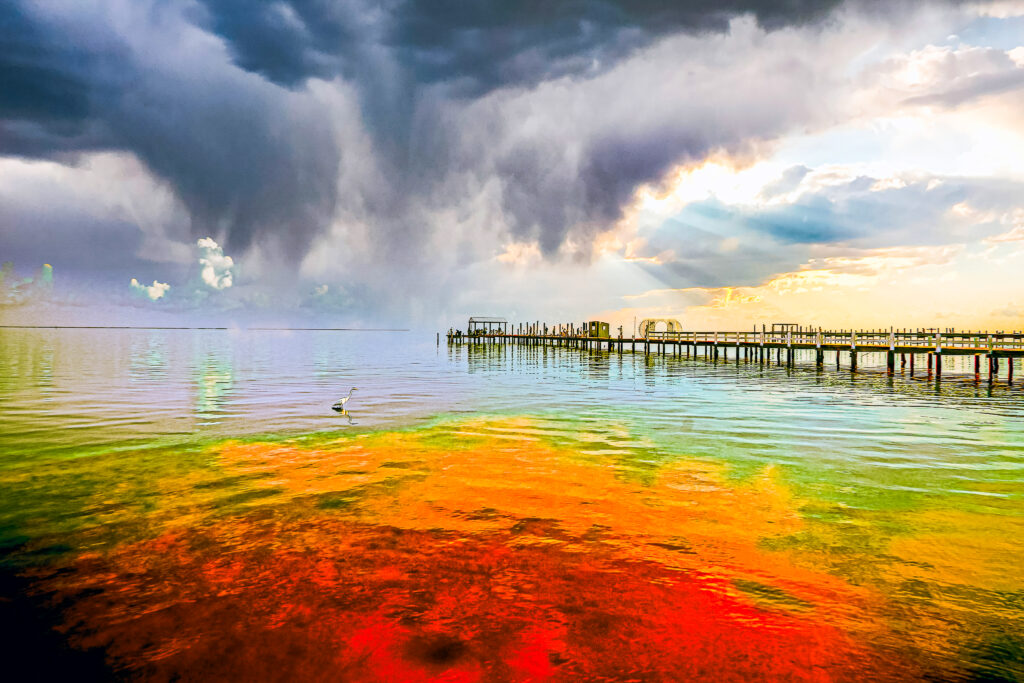
Featured prominently at the top of Homes in Paradise Photography, The Pier exemplifies the defining qualities of fine art coastal photography. The image immediately draws the viewer in through strong leading lines that guide the eye naturally toward the horizon. This sense of visual movement creates a rare balance between calm and momentum.
Light plays a central role in The Pier. Soft tonal transitions emphasize atmosphere over spectacle, allowing subtle gradations to carry emotional weight. Rather than relying on dramatic effects, the photograph achieves depth through nuance—the gentle contrast between sky and water, the quiet solidity of the structure, and the expansive negative space surrounding it.
One of the most compelling aspects of The Pier is its timeless quality. There are no visual markers that tie it to a specific era. This ambiguity gives the photograph lasting relevance, making it equally suited for contemporary interiors, luxury coastal homes, professional offices, and gallery settings. It is an image that reveals more the longer it is viewed.
Fine Art Photography as Statement Wall Art
Fine art photographic prints have become an essential element in modern interior design. A carefully chosen fine art photograph can anchor a space, establish mood, and reflect personal taste. Large-scale coastal fine art prints, in particular, create a sense of openness and tranquility.
Photographs like The Pier function as statement wall art. They offer visual clarity without overwhelming a room, making them ideal for residential interiors, coastal homes, and professional environments. Collectors and designers increasingly seek fine art photography that feels intentional, authentic, and emotionally resonant rather than purely decorative.
The Enduring Value of Fine Art Vision
In a world saturated with digital images, fine art photography stands apart through intention and craftsmanship. The finest fine art photographic masterpieces are created not for instant consumption, but for lasting connection. They continue to speak long after trends fade, offering a sense of calm and perspective.
The Pier reflects this philosophy through its emphasis on composition, atmosphere, and emotional restraint. It aligns with the traditions of classic fine art photography while remaining distinctly contemporary—an image designed to endure.
About the Artist: Jerry Grenough
Jerry Grenough is a fine art and architectural photographer based in Southwest Florida and the artist behind Homes in Paradise Photography. His work focuses on coastal landscapes, architectural photography, and minimalist compositions that emphasize balance, light, and atmosphere. Drawing inspiration from the natural serenity of coastal environments, Jerry creates fine art photographs that are both visually striking and calming.
His fine art photography is collected for private residences, professional spaces, and coastal homes, where timeless imagery and thoughtful composition enhance interior environments. Through Homes in Paradise Photography, Jerry Grenough offers fine art photographic prints designed to bring a sense of place, stillness, and enduring beauty into everyday spaces.